
Has Your Engine Overheated? What to Check After the Warning Sign
Updated: Sep 7
An engine can overheat, cool down, restart, and seem perfectly normal. However, that does not always mean it escaped damage.
Excessive heat is hard on gaskets, aluminium cylinder heads, pistons, rings, bearings, hoses, seals, and sensors. Even a short overheating event can leave clues behind, especially in the fluids, spark plugs, and compression readings. The sooner those clues are checked, the easier it is to tell whether the vehicle had a close call or whether internal engine damage may have started.
Before touching anything, let the engine cool fully. Hot coolant is under pressure and can cause serious burns. Do not remove the radiator cap or coolant reservoir cap while the system is hot.

Start with what happened when the engine overheated
The details around the overheating event matter. They can help narrow down whether the issue was likely caused by low coolant, poor airflow, a stuck thermostat, a failed water pump, a leaking hose, or a deeper internal problem.
Try to remember:
How high the temperature gauge went
Whether a red warning light appeared
How long the vehicle was driven while hot
Whether steam came from under the bonnet
Whether the heater blew cold air despite the engine being hot
Whether coolant was leaking onto the ground
Whether the engine lost power, misfired, or knocked
Whether the cooling fans were running
A brief spike in temperature that was caught early is very different from driving several kilometres with the gauge in the red. The longer the engine runs hot, the greater the risk of warped components, gasket failure, and oil breakdown.
If the engine was shut down quickly and has no obvious leaks, it may have avoided serious damage. If it was driven while severely overheated, treat it as a warning sign that needs proper inspection.
Check the coolant before restarting the engine
Coolant is one of the first places to look after an overheat. It can show whether the system lost fluid, became contaminated, or built pressure in a way it should not have.
Only check coolant when the engine is cold. Start with the coolant reservoir if the vehicle has one. The level should sit between the marked low and full lines. If it is empty, very low, oily, rusty, or sludgy, something is wrong.
Then look around the engine bay and underneath the vehicle for signs of leakage.
Common places to inspect include:
Radiator tanks and seams
Upper and lower radiator hoses
Heater hoses
Coolant reservoir and cap
Water pump area
Thermostat housing
Hose clamps and joins
The ground under the front of the vehicle
Coolant may be green, red, pink, blue, orange, or another colour depending on the vehicle and coolant type. Fresh coolant usually looks clean and consistent. Old or contaminated coolant may look muddy, oily, foamy, or rusty.
Oil floating in coolant is a major warning sign. It can point to internal mixing between oil and coolant passages. A failed head gasket, cracked cylinder head, or other internal fault can allow this to happen.
Also check for thick sludge under the radiator cap or inside the coolant reservoir. Some residue can build up over time, especially if coolant has been neglected, but heavy oily sludge needs attention.
Check the engine oil for coolant contamination
Engine oil tells its own story after overheating. Heat can thin the oil, break it down, and reduce its ability to protect bearings, camshafts, piston rings, and other moving parts. Coolant contamination makes the risk even worse.
Pull the dipstick, wipe it clean, reinstall it, then pull it again. Look closely at the oil level and condition.
Healthy oil can be golden, amber, brown, or dark depending on age. What matters most is whether it looks consistent.
Warning signs include:
A milky, creamy, or coffee-coloured appearance
Foamy residue on the dipstick
Oil level that appears higher than expected
A sweet coolant smell in the oil
Thick sludge under the oil filler cap
Metal particles or glitter in the oil
Milky oil often means coolant has mixed with engine oil. That can happen when a head gasket fails, when a cylinder head warps, or when another internal passage is compromised.
Do not keep driving if the oil looks contaminated. Coolant does not lubricate like oil. Once coolant enters the oil system, bearings and other precision surfaces can wear quickly.
There is one small catch. A little creamy residue under the oil cap can sometimes appear on vehicles that only do short trips, especially in cool or damp conditions. Condensation can build up if the engine rarely reaches full operating temperature. But after an overheat, any milky residue deserves closer inspection rather than a quick dismissal.

Look for pressure problems in the cooling system
An engine that has overheated may have a simple leak, but abnormal cooling system pressure can also point to combustion gases entering the coolant. That often happens when a head gasket no longer seals properly.
Signs of pressure-related trouble include:
Coolant being pushed out of the overflow
Bubbles appearing in the coolant reservoir
Radiator hoses becoming very hard soon after startup
Repeated coolant loss with no visible leak
Overheating that returns after topping up coolant
A sweet smell from the exhaust
White smoke or vapour from the exhaust after warm-up
Some vapour from the exhaust can be normal on cold mornings, especially in cooler parts of Australia. It should clear as the exhaust warms. Persistent white smoke with coolant loss is different.
A workshop can use a cooling system pressure test to help find external leaks. They can also use a chemical test to check for combustion gases in the cooling system. These tests can help confirm whether a suspected head gasket issue is likely.
Inspect the spark plugs for signs of coolant entry
Spark plugs sit inside the combustion chambers, so they can reveal problems that are not obvious from outside the engine. Removing them allows each cylinder to be compared.
A healthy set of spark plugs will usually show similar wear and colour across all cylinders. They do not have to look identical, but one plug that looks very different from the rest deserves attention.
Look for:
One plug that is unusually clean compared with the others
White crusty deposits
Rust or moisture on the plug
A plug that smells sweet or damp
Uneven colouring between cylinders
Damaged electrodes or signs of overheating
When coolant enters a combustion chamber, it can effectively steam-clean the spark plug and piston crown. That can make one plug look cleaner than the others. In other cases, coolant additives leave pale or crusty deposits.
This is why comparing all plugs matters. One unusual plug can point to a particular cylinder, which helps guide further testing.
Spark plugs should be removed carefully, especially from aluminium cylinder heads. If the engine is hot, wait. Removing plugs from a hot aluminium head can increase the risk of thread damage.

Check compression if the cause is not obvious
If the fluids look normal and the spark plugs do not show a clear problem, that still does not guarantee the engine is fine. A compression test can help show whether each cylinder can seal and build pressure properly.
A compression test measures how much pressure each cylinder creates during cranking. The exact reading varies by engine design, but the key point is consistency. Cylinders should generally be fairly close to each other.
Low or uneven compression can suggest:
A leaking head gasket
Warped cylinder head sealing surfaces
Damaged piston rings
Burnt or leaking valves
Cylinder wall damage
A single low cylinder may point to a localised issue. Two neighbouring low cylinders can be a sign of head gasket failure between them. Low readings across all cylinders can suggest broader wear, incorrect test conditions, or timing-related issues.
A leak-down test can go further. It uses compressed air to show where pressure is escaping. Air bubbles in the cooling system may suggest a head gasket or cylinder head issue. Air from the oil filler can suggest ring or bore leakage. Air from the intake or exhaust can point towards valves.
Compression and leak-down tests are especially useful when the engine still runs but something feels off. They help separate guesswork from evidence.
Pay attention to how the engine behaves after it cools
An overheated engine may start and idle normally, then show symptoms only once it warms up again. That is why a short restart is not enough to declare it healthy.
Watch for changes such as:
Rough idle
Misfiring under load
Hard starting
Knocking or ticking noises
Temperature rising faster than usual
Heater temperature changing unexpectedly
Loss of power
Coolant smell from the exhaust or engine bay
Warning lights returning
Also keep an eye on the temperature gauge during the next few drives, if the vehicle is safe to operate. It should rise steadily to normal operating temperature and remain stable. A gauge that climbs quickly, drops suddenly, or moves around more than usual may point to air in the cooling system, low coolant, thermostat trouble, fan issues, or a failing head gasket.
If the vehicle has gone into limp mode, is misfiring badly, making mechanical noise, or losing coolant quickly, do not continue driving it. Towing is often cheaper than causing further engine damage.
Know the difference between a close call and a bigger problem
Some overheating events end with a simple repair. A split hose, weak radiator cap, failed cooling fan, or leaking plastic tank can cause overheating without immediately damaging the engine, especially if the warning was caught early.
Other cases are more serious. The engine may still run, but hidden damage can show up later.
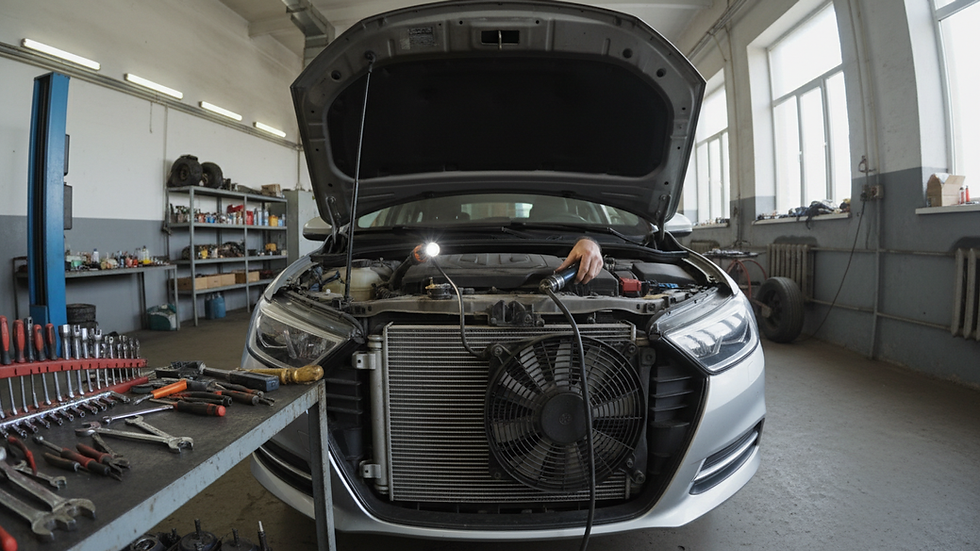
Check the cooling system parts that caused the overheat
After looking for engine damage, the original cause still needs to be found. Overheating is a symptom, not a diagnosis.
Common causes include:
Low coolant from a leak
Failed thermostat
Blocked radiator
Faulty radiator cap
Failed electric cooling fan
Damaged fan relay or fuse
Worn water pump
Collapsed radiator hose
Air trapped in the cooling system
Incorrect coolant mixture
Blocked heater core
Debris restricting airflow through the radiator
Australian driving conditions can be tough on cooling systems. Long highway climbs, towing, stop-start traffic, hot summer days, and dusty roads can expose weak parts quickly. A cooling system that seems acceptable in mild weather may struggle under load.
Do not replace random parts without checking. For example, a thermostat may be blamed when the real issue is a radiator fan that does not switch on at low speed. A water pump may be blamed when air trapped in the system is stopping coolant flow. A proper diagnosis saves time and avoids repeat overheating.
Do not ignore small signs after the repair
Once the obvious fault is repaired, keep monitoring the vehicle. Some internal issues only become clear after a few heat cycles.
For the next week or two, check:
Coolant level when cold
Oil condition on the dipstick
Temperature gauge behaviour
Any new leaks under the vehicle
Exhaust smoke after warm-up
Heater performance
Engine idle quality
A small coolant drop after repairs can sometimes happen if trapped air works its way out and the system needs a final top-up. Repeated coolant loss is different. Marking the cold level on the reservoir with tape can make changes easier to spot.
If the oil becomes milky, the coolant becomes oily, or overheating returns, stop driving and investigate. Repeated overheating can turn a repairable issue into a major engine failure.
When to get professional diagnosis
Some checks are simple. Looking at coolant condition, oil condition, visible leaks, and gauge behaviour can be done carefully at home. Other checks need tools and experience.
Get professional help if:
The engine overheated badly or for more than a brief moment
Coolant and oil appear to be mixing
The vehicle keeps losing coolant
The engine misfires after overheating
Compression readings are low or uneven
Exhaust smoke persists after warm-up
The temperature gauge rises again after repairs
You are unsure how to safely bleed the cooling system
Modern engines can be unforgiving when overheated. Aluminium heads, multi-layer steel head gaskets, plastic cooling components, and tight tolerances all work well when temperatures stay controlled. Once the system overheats, small weaknesses can become costly faults.
A careful inspection does not always mean bad news. It may confirm that the engine survived and only the cooling fault needs attention. But it is better to know early than to keep driving until a small warning becomes a large repair.
The safest next step after an overheated engine
After an engine overheats, slow down and check the evidence. Start with the coolant and oil. Look for contamination between the two. Inspect the spark plugs if there are signs of misfire, coolant loss, or uneven running. Use compression testing when the first checks do not tell the full story.
Most of all, do not trust a smooth idle by itself. An engine can run after overheating and still have damage starting inside. Careful checks help you decide whether it was a close call, a cooling system repair, or a sign of a deeper internal problem.
Conclusion
In conclusion, understanding the signs of engine overheating and the subsequent checks can save you from costly repairs. By being proactive and vigilant, you can ensure your vehicle remains in top condition. Remember, the engine's health is paramount. Regular maintenance and timely inspections are crucial. If you suspect any issues, don't hesitate to seek professional help.





Comments